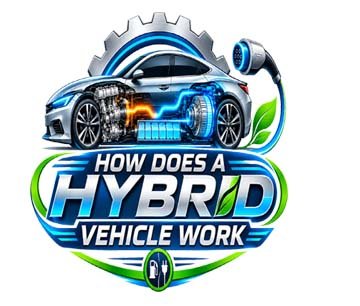
A hybrid vehicle has a clever advantage over a conventional car: it can use two different sources of power to move the same set of wheels. One is a gasoline engine. The other is an electric motor supported by a battery. The interesting part is not simply that both exist under the hood. It is how the vehicle decides when to use each one, when to combine them, and when to recover energy that an ordinary car would waste.
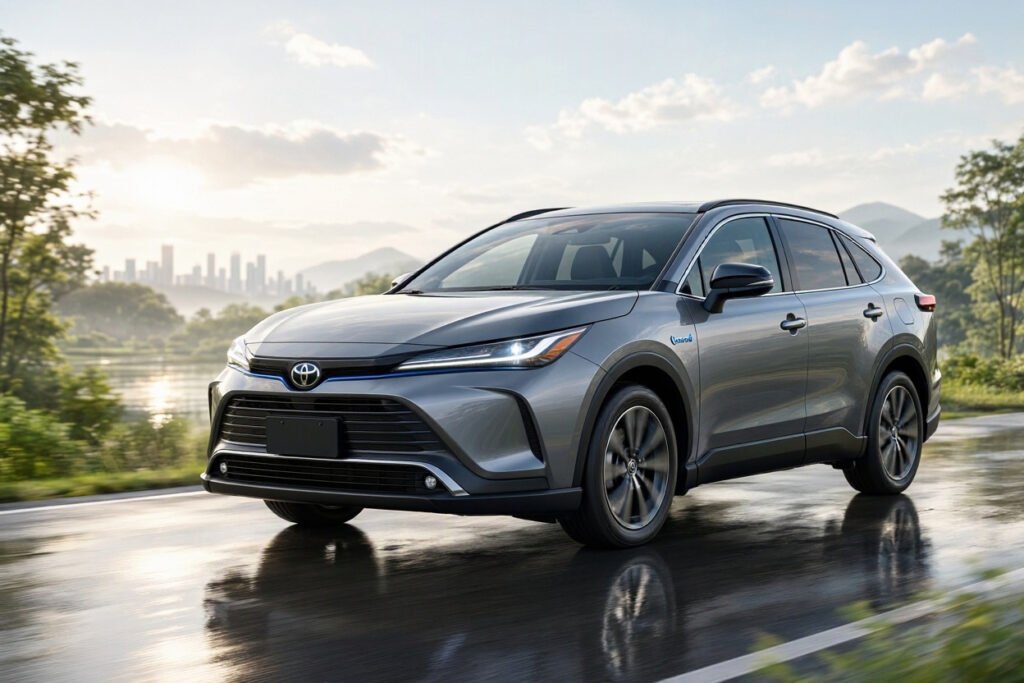
Understanding how does a hybrid vehicle work means looking beyond the battery badge on the trunk. The real story involves traffic conditions, acceleration, braking, engine efficiency, and a computer that constantly manages the flow of power.
For drivers considering a hybrid, these details answer practical questions: Why does the engine sometimes switch off at a traffic light? Can the car recharge its battery while driving? Does it need to be plugged in? And where does the fuel saving actually come from?
1. Two Power Sources, One Moving Vehicle
In a conventional gasoline car, the engine burns fuel to produce mechanical energy. That energy passes through the transmission and drivetrain before reaching the wheels. Some of it is inevitably lost as heat, friction, and other inefficiencies.
A hybrid adds an electric motor and a high-voltage battery to this arrangement. Depending on the design, the motor can move the car independently, assist the gasoline engine, or help recover energy during deceleration.
The main components work together:
- Gasoline engine: Supplies power for acceleration, cruising, and other driving conditions.
- Electric motor: Produces immediate torque and can propel the vehicle or assist the engine.
- Hybrid battery: Stores electricity for the motor and receives recovered energy.
- Power electronics: Control the electrical energy flowing between the battery and motor.
- Control computer: Determines the appropriate combination of electric and gasoline power.
- Transmission or power-split system: Transfers power to the wheels according to the vehicle’s design.
- Regenerative braking system: Converts part of the vehicle’s motion into electricity when slowing down.
Not every hybrid uses identical hardware. Some have separate motors for driving and generating electricity, while others combine several functions into one assembly.
2. What Happens When You Start the Car?
Press the start button and the hybrid system becomes ready to drive. That does not necessarily mean the gasoline engine starts immediately.
If the battery has sufficient charge, the temperature is suitable, and the car’s power demand is low, a full hybrid may begin moving using its electric motor alone. The engine can remain switched off while the vehicle travels slowly.
However, the engine may start straight away if the battery needs charging, the cabin requires substantial heating, the engine is cold, or the driver requests more power.
This explains an important detail: a hybrid does not follow a rigid rule that electricity always comes first. Its control system considers several conditions simultaneously.
Also, a hybrid that appears silent may still be ready to move. Drivers and pedestrians should never assume that a quiet vehicle is switched off.
3. Why Does a Hybrid Use More Electric Power in City Traffic?
City driving gives a hybrid several opportunities to save fuel. A conventional engine may keep consuming fuel while idling, and repeatedly accelerating a vehicle demands energy that must come from burning more gasoline.
A hybrid handles these situations differently. When the car stops, the gasoline engine can shut down automatically. When traffic begins moving again, the electric motor can provide the initial push, provided the system has enough available battery power.
At low speeds, the motor can be particularly useful because it delivers torque almost immediately. During stronger acceleration, the gasoline engine may start and work alongside the motor.
This is why a hybrid can be especially economical in stop-and-go traffic. It reduces unnecessary idling and recovers some energy each time the vehicle slows down. On an uninterrupted highway journey, those opportunities may be less frequent.
4. Regenerative Braking: How the Battery Recharges Without a Plug
One of the smartest features of a hybrid is regenerative braking. To understand it, consider what happens when a conventional car slows down: its friction brakes convert much of the vehicle’s kinetic energy into heat.
A hybrid can recover part of that energy instead.
When the driver releases the accelerator or applies the brakes, the electric motor can operate as a generator. The moving wheels turn the drivetrain, the generator produces electricity, and the battery stores some of that energy for later use.
The process follows four steps:
- The vehicle is moving and carrying kinetic energy.
- The driver slows down, allowing the motor-generator to resist the wheels’ rotation.
- That mechanical energy is converted into electrical energy.
- The battery stores the recovered electricity, which can help power the motor during a later acceleration.
There is one important limitation: regenerative braking does not recover all the energy used to accelerate the car. Some energy is lost through heat, air resistance, tire friction, and the electrical conversion process. Conventional friction brakes also remain necessary, particularly during hard stops or when regeneration is limited.
The battery may receive less energy when it is already highly charged, cold, or otherwise unable to accept much current.

5. Does a Hybrid Vehicle Need to Be Plugged In?
The answer depends on the type of hybrid you own. The word hybrid covers more than one system, and confusing them can lead to the wrong buying decision.
| Vehicle type | How it uses electricity | External charging |
|---|---|---|
| Mild hybrid (MHEV) | Electric assistance supports the engine | Usually not required |
| Full hybrid (HEV) | Can use electric power alone in suitable conditions or combine both power sources | Not required |
| Plug-in hybrid (PHEV) | Uses a larger battery for more extensive electric driving | Yes, for maximum electric-driving benefits |
A conventional full hybrid replenishes its battery through regenerative braking and, when the system determines it is useful, the gasoline engine. You refuel it at a gas station rather than plugging it into a wall outlet.
A plug-in hybrid has a larger battery and a charging port. It can travel farther on electricity alone, depending on the model and conditions, before relying more heavily on its engine.
A mild hybrid is different again: its electric system assists the engine but generally cannot propel the vehicle independently.
Before buying, check the exact model’s specifications rather than assuming every vehicle carrying a hybrid badge behaves the same way.
6. What Happens When You Accelerate Hard or Drive on a Highway?
Electric power is useful, but it has limits. Climbing a steep hill, overtaking another vehicle, carrying a heavy load, or accelerating onto a highway can demand more power than the electric motor can supply on its own.
The control system may start the gasoline engine and combine its output with the motor’s contribution. This arrangement provides additional power without requiring the gasoline engine to handle every demand alone.
At steady highway speeds, the engine may supply most of the driving power because it can operate efficiently under suitable conditions. Some hybrid designs also use the engine to generate electricity, while others mechanically connect the engine to the wheels. Many use a combination of these approaches.
There is no universal switching speed. The decision depends on the drivetrain design, battery condition, road gradient, temperature, and how much power the driver requests.
7. Why Do Hybrid Vehicles Usually Consume Less Fuel?
The advantage comes from several small improvements working together, rather than from a battery that magically eliminates gasoline use.
- Less idling: The engine can shut down when its power is unnecessary.
- Electric assistance: The motor helps the engine during acceleration.
- Energy recovery: Regenerative braking returns some otherwise-wasted energy to the battery.
- Efficient engine operation: Some hybrid systems can keep the engine operating in favorable conditions.
- Reduced engine workload: Electric assistance may allow a smaller gasoline engine to meet the vehicle’s power requirements.
Actual fuel economy varies with vehicle design, driving habits, temperature, road conditions, and maintenance. Aggressive acceleration, high speeds, heavy loads, and extreme weather can reduce the advantage.
A hybrid is not automatically the cheapest choice for every driver. Purchase price, annual mileage, fuel prices, repair costs, and how long you intend to keep the vehicle all matter.
8. Do Hybrid Vehicles Need Special Maintenance?
A hybrid still has a gasoline engine, so it needs appropriate engine oil, filters, coolant, and scheduled servicing. Its electrical components also require attention according to the manufacturer’s maintenance schedule.
The high-voltage battery is designed to operate with a dedicated battery-management and thermal-control system. Warning lights, unusual changes in performance, or hybrid-system fault messages should be checked by a qualified technician.
Regenerative braking can reduce reliance on friction brakes in some driving conditions, but it does not eliminate brake maintenance. Tires, suspension, coolant systems, and the conventional 12-volt battery also remain important.
One useful buying precaution is to check the vehicle’s service history and have the hybrid battery and associated systems assessed before purchasing a used model. Do not attempt to test or repair high-voltage components yourself.
9. Is a Hybrid the Right Car for Your Driving Habits?
A hybrid can make particular sense for someone who drives regularly through congested streets, encounters frequent stops, and wants to reduce fuel consumption without depending on public charging stations.
A plug-in hybrid may suit a driver who can charge at home and usually travels short daily distances, but also wants gasoline-powered backup for longer trips.
For someone who drives mainly on open highways, the fuel-saving advantage may be smaller. The best comparison is between the actual vehicles you are considering, using their fuel-economy figures, purchase prices, expected mileage, and maintenance requirements.
The bottom line: a hybrid vehicle works by coordinating gasoline power, electric assistance, and recovered braking energy. Its real advantage comes from making better use of energy that a conventional vehicle would otherwise waste.
Amazon Affiliate Product Suggestions
These five product categories can complement an article about hybrid vehicles by helping readers monitor their cars or learn more about vehicle maintenance. The links below are Amazon search links, not verified individual product listings. Check compatibility before recommending a product for a particular hybrid model.
| Product | Why it fits the article | Amazon link |
|---|---|---|
| Digital tire pressure gauge | Helps drivers check tire pressure, which can affect fuel economy | Search on Amazon |
| OBD2 diagnostic scanner | Reads supported vehicle fault codes; hybrid-system coverage varies by scanner and model | Search on Amazon |
| 12V car battery tester | Helps assess the conventional auxiliary battery | Search on Amazon |
| Hybrid vehicle maintenance guide | Offers model-specific servicing and troubleshooting information when available | Search on Amazon |
| Automotive tire pressure monitoring system | Helps drivers monitor tire pressure while driving | Search on Amazon |