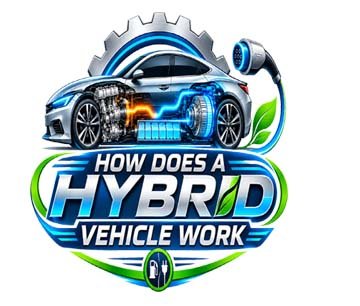
A hybrid vehicle does more than switch between a gasoline engine and an electric motor. In many hybrid designs, the engine can also produce electricity to support the battery and electric drive system. This allows the vehicle to maintain its energy supply even when regenerative braking provides little opportunity to recover power.
The process is more sophisticated than simply running the engine to charge a battery. The vehicle’s control system decides when generating electricity is useful, how much power is needed, and whether the engine should drive the wheels directly or supply energy through a generator.
Understanding how hybrid vehicles use engine power to recharge batteries explains why the engine sometimes runs when the car is stopped, why the battery gauge can rise during driving, and why the engine does not continuously charge the battery to its maximum level.

The Engine-to-Battery Energy Path
In a typical hybrid system, the gasoline engine can transfer mechanical energy to an electrical generator. The generator converts the engine’s rotation into electricity, which the vehicle can use to power an electric motor, supply electrical systems, or replenish the hybrid battery.
The basic sequence is straightforward:
- The gasoline engine burns fuel to produce mechanical power.
- The engine’s rotation drives a generator, either directly or through the vehicle’s power-split mechanism.
- The generator converts mechanical energy into electrical energy.
- Power electronics regulate the electricity to meet the system’s requirements.
- The battery stores some of the available electrical energy when charging is appropriate.
Not every hybrid follows precisely the same arrangement. Some use separate motor-generators, while others rely on different transmission and electrical layouts. The central principle remains the same: the engine can supply mechanical energy that is converted into electricity for the hybrid system.
Three Ways Engine Power Can Support a Hybrid Battery
1. Generating Electricity While the Vehicle Is Moving
Some hybrid vehicles can generate electricity while traveling, particularly when the engine is operating efficiently and the battery needs additional energy.
For example, a driver may accelerate onto a highway. The gasoline engine provides much of the required power, while the electrical system manages the battery’s contribution. Once the vehicle reaches a steady cruising speed, the control system may use available engine power to generate electricity if conditions make that worthwhile.
The resulting electricity may go directly to the electric motor rather than being stored in the battery. If the battery can accept additional charge and the system determines that charging is beneficial, some energy can be directed into the battery instead.
This distinction matters because electricity generated by the engine does not always pass through the battery. Supplying an electric motor directly can avoid unnecessary battery charging and discharging losses.
2. Charging the Battery While the Vehicle Is Stationary
In certain full hybrids, the gasoline engine may start while the vehicle is parked or stopped to maintain the battery’s charge.
Imagine waiting in a parking lot with the vehicle in READY mode. If the battery’s state of charge falls below the system’s preferred range, the engine may start automatically. A motor-generator can then produce electricity, allowing the battery to recover some energy.
When the required charge level is reached, the engine may shut down again. The exact starting and stopping thresholds depend on the vehicle’s design, battery temperature, electrical demand, and other operating conditions.
This behavior is normal in many hybrids. However, a hybrid that is switched off completely may not charge its traction battery simply because the engine is running elsewhere. Drivers should follow the manufacturer’s instructions and never leave a vehicle running in an enclosed garage.
3. Using Engine Power Through a Power-Split Transmission
Some hybrid vehicles use a power-split transmission that coordinates the gasoline engine, electric motor-generators, and wheels.
In these systems, the engine’s mechanical output can be divided between driving the wheels and operating a generator. The generator’s electricity can then power another electric motor or contribute to battery charging.
This arrangement allows the engine to operate at a speed that does not always match wheel speed directly. The vehicle’s control system can coordinate the engine and electric motors to meet the driver’s demand while balancing fuel economy and battery charge.
Other hybrids use different transmission arrangements, including conventional automatic transmissions paired with electric motors. Therefore, the exact engine-to-battery pathway depends on the vehicle’s powertrain.
What Determines Whether the Engine Charges the Battery?
The engine does not necessarily charge the battery whenever it is running. The hybrid control system continuously evaluates several factors before deciding how to distribute available power.
| Factor | Effect on Engine-Driven Charging |
|---|---|
| Battery state of charge | A lower charge level may encourage charging if conditions allow |
| Battery temperature | Excessive heat or cold may restrict the amount of energy the battery accepts |
| Acceleration demand | More engine power may be needed to propel the vehicle |
| Vehicle speed | Different speeds favor different combinations of engine and electric power |
| Fuel efficiency | The system may avoid generating electricity when doing so wastes fuel |
| Battery power limits | Charging may be reduced when the battery approaches its permitted upper range |
The vehicle’s main objective is not to keep the battery gauge permanently full. It is to maintain enough usable energy for efficient driving, acceleration assistance, and energy recovery.
Engine Charging Versus Regenerative Braking
Engine-driven charging and regenerative braking both supply electricity to a hybrid battery, but they recover energy from different sources.
Regenerative braking captures some of the vehicle’s kinetic energy as it slows down. Engine-driven charging converts energy obtained from gasoline into mechanical power and then electricity.
| Feature | Engine-Driven Charging | Regenerative Braking |
|---|---|---|
| Original energy source | Gasoline fuel | Vehicle movement |
| When it occurs | When the control system calls for engine power and generation | During suitable deceleration or braking |
| Main benefit | Helps maintain battery energy when needed | Recovers some energy that would otherwise become heat in the brakes |
| Fuel consumption | Uses fuel when the engine is running | Does not require additional engine fuel specifically to recover braking energy |
| Main limitation | Conversion losses and fuel use | Limited by braking conditions, battery acceptance, and available storage capacity |
Neither method guarantees that the battery will continuously gain charge. The electric motor may use energy at the same time the generator produces it, and the control system may prioritize propulsion over storage.
Useful Products for Understanding Hybrid Charging
For drivers who want to investigate their vehicle’s energy-management system, these product categories may help. Always verify compatibility with the specific vehicle before purchasing.
| Product | Best For | Why It’s Useful | Amazon Link |
|---|---|---|---|
| OBD2 diagnostic scanner | Basic fault-code checks | Can read supported engine and vehicle-system codes | Browse OBD2 scanners |
| Hybrid-compatible scan tool | Hybrid system diagnostics | Some models provide battery and motor-generator information unavailable through basic scanners | Browse hybrid scan tools |
| Vehicle-specific repair manual | Learning the powertrain layout | Explains the engine, generator, transmission, and service procedures for supported models | Browse hybrid repair manuals |
| Automotive multimeter | Low-voltage electrical testing | Useful for appropriate 12-volt electrical checks when used correctly | Browse automotive multimeters |
| Hybrid vehicle training guide | Understanding hybrid technology | Helps explain motor-generators, power electronics, and battery-management principles | Browse hybrid technology guides |
A basic scanner may not reveal detailed hybrid battery data, and not all scan tools support every make or model. High-voltage testing should be left to qualified technicians with the proper training and equipment.
Does Engine-Driven Charging Waste Gasoline?
Converting gasoline energy into electricity inevitably involves losses. Energy is lost as heat during combustion, mechanical transmission, electrical generation, power conversion, and battery charging.
For that reason, running the engine solely to charge the battery is not automatically more efficient than using the engine to drive the wheels. A hybrid may nevertheless choose engine-driven generation when it supports the overall efficiency of the powertrain or helps maintain a suitable battery charge.
For example, the engine may operate in a more efficient range while supplying a combination of wheel power and electrical energy. The electric motor can then assist during acceleration or low-speed driving, when its characteristics are useful.
The best strategy depends on the vehicle’s design and current conditions. Drivers generally should not try to force engine charging by repeatedly revving the engine or changing gears unnecessarily. The built-in hybrid control system is designed to manage this process automatically.

Why the Battery Does Not Stay Fully Charged
Hybrid batteries are typically managed within a limited operating range. The dashboard gauge may represent this usable range rather than the battery’s entire physical capacity.
Keeping some charging and discharging headroom allows the system to store energy from future regenerative braking events. It also gives the electric motor energy to assist acceleration and helps the battery operate within manufacturer-defined limits.
As a result, a hybrid battery gauge may rise when the engine generates electricity and fall when the electric motor provides assistance. These changes are part of normal energy management, not necessarily signs of a fault.
If the vehicle displays persistent hybrid-system warnings, loses power unexpectedly, or shows unusual battery behavior, a professional diagnostic inspection can help identify the cause.
Hybrid vehicles use engine power to recharge batteries by converting mechanical energy into electricity through a generator or motor-generator. Depending on the powertrain, this can happen while the car is moving, while it is stationary in an appropriate operating mode, or as part of a coordinated power-split system.
The electricity may charge the battery, supply an electric motor directly, or support other vehicle systems. The control system chooses the most suitable arrangement based on battery condition, driving demand, temperature, and fuel efficiency.
The key point is that engine-driven charging is one part of a hybrid’s broader energy-management strategy. Rather than keeping the battery completely full, the vehicle balances stored energy, fuel use, electric assistance, and regenerative braking to deliver efficient and dependable performance.